

Blog
Membrane vs. PSA Nitrogen Generators: A Practical Buyer’s Guide
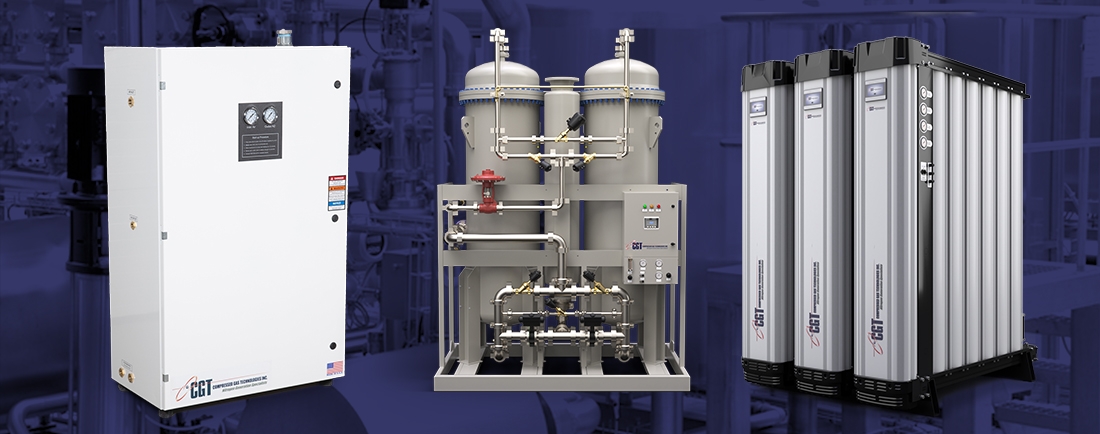
Wondering if a membrane nitrogen generator is the right fit for your operation?
Are you trying to decide between nitrogen generation systems?
Feeling overwhelmed by the options?
This practical buyer’s guide breaks down real-world use cases, operational differences, and decision factors to help you confidently choose between a membrane nitrogen generator and a PSA system.
How a Membrane Nitrogen Generator Works
A membrane nitrogen generator separates nitrogen from compressed air using hollow fiber membranes. Oxygen, water vapor, and other gases permeate through the membrane walls faster than nitrogen, allowing nitrogen-rich gas to exit the system.
Key characteristics of a membrane nitrogen generator include:
- Continuous nitrogen production
- Fewer moving parts
- Simple, rugged design
- Ideal for moderate purity requirements
Because of their simplicity, membrane systems are often selected for environments where reliability and low maintenance are top priorities.
How PSA Nitrogen Generators Work
Pressure Swing Adsorption (PSA) systems use carbon molecular sieve material to adsorb oxygen under pressure while allowing nitrogen to pass through. The system cycles between pressurization and regeneration to produce nitrogen at higher purity levels.
PSA systems are known for:
- Higher achievable nitrogen purity
- Precise purity control
- Greater flexibility for varying demand
While PSA technology is more complex than membrane systems, it is often required for applications with strict purity standards.
Membrane vs. PSA: Key Operational Differences
Understanding the operational differences helps clarify which technology makes sense for your facility.
Nitrogen Purity Requirements
- Membrane nitrogen generator: Best suited for low to medium purity applications, typically up to ~99.5%.
- PSA systems: Ideal for high-purity requirements, often exceeding 99.9%.
If your process does not require ultra-high purity, a membrane nitrogen generator may be the most practical and cost-effective solution.
Flow Rate and Demand Patterns
- Membrane systems: Excel at continuous, steady flow applications.
- PSA systems: Handle variable demand more efficiently and allow tighter purity adjustments.
Facilities with predictable nitrogen usage often benefit from membrane technology.
Maintenance and Reliability
- Membrane nitrogen generators: Fewer components, minimal maintenance, and high reliability in harsh or remote environments.
- PSA systems: Require more maintenance due to valves and cycling components.
For operations where uptime and simplicity matter most, membrane systems are often preferred.
Energy Consumption
- Membrane systems: Typically consume more compressed air but offer simpler operation.
- PSA systems: More energy-efficient at higher purities but involve greater system complexity.
Real-World Use Cases
When a Membrane Nitrogen Generator Is the Best Fit
- Food and beverage packaging
- Tire inflation and automotive applications
- Oil and gas operations
- Fire prevention and inerting
- Marine and offshore environments
These applications value reliability, durability, and moderate purity over extreme precision.
When PSA Is the Better Choice
- Electronics manufacturing
- Pharmaceuticals
- Laser cutting
- Specialty chemical processes
These environments require tight purity control and higher nitrogen concentrations.
Cost Considerations Beyond the Purchase Price
While upfront cost matters, long-term operational expenses are just as important.
A membrane nitrogen generator often has:
- Lower maintenance costs
- Simpler installation
- Reduced downtime risk
PSA systems may have:
- Higher upfront and maintenance costs
- Greater flexibility for future purity needs
Evaluating total cost of ownership helps avoid surprises after installation.
Choose the Right Nitrogen Generator for Your Operation
Selecting between a membrane nitrogen generator and a PSA system doesn’t have to be complicated. With the right guidance, you can invest in a solution that improves efficiency, reduces costs, and supports your production goals.
Ready to determine which nitrogen generation technology is right for your facility? Contact us today to discuss your application and get expert guidance tailored to your operational needs.